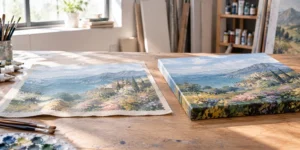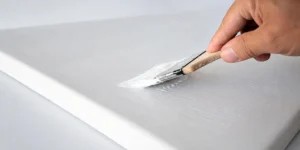
Painting directly on canvas without applying gesso can significantly change how the paint behaves on the surface. For oil painting, proper canvas preparation is particularly important because long-term direct contact between oil-based binders and natural fibers can accelerate the aging of the canvas. For acrylic painting, however, whether additional priming is necessary depends on the condition of the canvas, the painting technique, and the desired effect. If you are using a pre-primed canvas, you usually do not need to apply another layer of gesso.
What Is Gesso?
Gesso is a primer used to prepare a surface for painting. Traditional formulas typically contain fillers such as chalk, white pigments, and a binding agent. Historically, animal glue was widely used as the binder. Modern acrylic gesso is usually made from an acrylic polymer combined with pigments and fillers. Once dry, it creates a painting surface with a certain amount of texture and absorbency.
Gesso does more than simply make the canvas white. It can change the absorbency, surface texture, and paint adhesion of the canvas, creating a more stable and controllable surface for painting. For oil painting, canvas preparation may also involve sizing, which acts as a protective barrier between the natural fibers and the oil-based painting materials. The ground or primer then helps create a suitable surface for painting.
Five Effects of Painting Without Gesso
1. Paint May Be Absorbed Into the Canvas, Changing the Appearance of Colors
Untreated cotton or linen canvas can be highly absorbent. When paint is applied directly to it, the canvas may absorb some of the water, oil, or other medium in the paint, allowing the material to penetrate into the fabric.
In oil painting, this phenomenon is often referred to as “sinking in.” The oil medium can be absorbed into the support, causing colors to appear darker or duller after drying, with less surface gloss. On a properly prepared canvas, paint flow and absorption are generally more controlled, making it easier for artists to judge how colors will ultimately look.
2. The Brush May Feel Draggy, Making Blending and Painting More Difficult
The high absorbency of raw canvas can cause the medium in the paint to leave the surface more quickly. When painting, the brush may feel less smooth and more resistant, while the paint may not spread as easily as it does on a properly prepared surface.
This difference can be especially noticeable for artists who use wet-on-wet techniques, gradients, or repeated color blending. More paint may also be needed to achieve the same level of coverage.
3. Oil Painting Requires Special Attention to Long-Term Canvas Protection
This is one of the most important long-term preservation considerations when preparing a canvas for oil painting. Oil paints typically use drying oils as their binder. If these oils penetrate directly into natural canvas fibers over a long period, they may contribute to chemical degradation and eventually make the fibers more brittle.
For this reason, oil painting canvases generally require an appropriate sizing or other isolation system to create a protective barrier between the oil-based painting layers and the natural fibers. Proper canvas preparation helps protect the natural fibers from direct contact with oil-based painting materials.
4. Canvas Tension and Surface Stability May Be Affected by Environmental Conditions
Natural-fiber canvas absorbs and releases moisture as humidity changes, which can cause the fabric to expand or contract to some extent.
If the canvas has not been properly prepared, or if the stretching and environmental conditions are not ideal, these changes may be more likely to appear as looseness, rippling, or changes in canvas tension. Therefore, the flatness of a canvas does not depend solely on whether gesso has been applied. Fiber type, stretching method, humidity, and storage conditions can all play a role.
5. Exposed Fabric Is More Vulnerable to Dust and Staining
Untreated fabric fibers are directly exposed to the environment and can more easily collect dust and stains. This can make cleaning and maintenance more difficult, especially during long-term display or storage.
However, whether an artwork can be cleaned and how it should be cleaned depends on the type of paint, surface coating, and the specific condition of the artwork.
Differences Between Oil and Acrylic Painting
Although raw canvas can affect both oil and acrylic painting, the requirements for canvas preparation are not exactly the same. Oil painting requires particular attention to the separation between oil-based binders and natural fibers, while acrylic painting offers greater flexibility and can, for some techniques, be applied directly to a suitable canvas surface.
| Comparison | Oil Painting Without Proper Priming / Preparation | Acrylic Painting Without Proper Priming / Preparation |
|---|---|---|
| Canvas Fiber Protection | Requires particular attention to the long-term effects of oil-based binders on natural fibers | Generally does not present the same type of oil-related concern, but the surface behavior will still be different |
| Paint Appearance | More likely to show oil absorption, a duller appearance, and “sinking in” | Water and medium may be absorbed quickly, resulting in a more matte and absorbent surface |
| Painting Experience | May affect paint application, blending, and brush control | May cause paint to dry faster, affecting blending and surface control |
| Surface Effect | Usually more difficult to achieve a stable and controllable painting surface | Can be suitable for certain techniques that emphasize staining and penetration effects |
| Long-Term Preservation | Improper canvas preparation may increase the risk of natural-fiber deterioration | Generally more flexible, but the canvas, paint, and environmental conditions should still be considered for long-term stability |
Oil painting has stricter requirements for canvas preparation, while acrylic painting allows more flexibility depending on the intended technique. If you want stable color appearance, controlled absorbency, and a more consistent painting experience, using a properly prepared canvas is usually the easier choice.
Are There Situations Where Artists Intentionally Skip Gesso?
Yes. Some contemporary artists and fiber-art creators intentionally use raw canvas and paint directly onto it, taking advantage of the matte, stain-like effect created when paint penetrates into the fibers.
This is not simply a case of forgetting to prime the canvas—it is a deliberate artistic choice. It can create visual effects that are difficult to achieve on traditional pre-primed canvas. At the same time, it means that paint absorption will be more pronounced, and color saturation and surface control will work differently.
What If You Want to Keep the Natural Texture Without Excessive Absorption?
If you want to preserve the natural color and texture of the canvas, you can consider clear gesso or a suitable acrylic sizing product, depending on the requirements of the artwork. These products can change the absorbency and surface properties of the canvas without completely covering up the visual characteristics of the fabric.
The specific product and application method should always follow the manufacturer’s instructions.
Practical Tips
1. Check Whether Your Canvas Is Already Primed
First, check whether the canvas you purchased is already pre-primed. Many commercially available canvases are already prepared for painting. Canvas labeled “triple-primed,” “acrylic gesso,” or with similar descriptions can usually be painted on directly without applying another layer of primer.
If you want a smoother surface, you can add additional layers of gesso as needed and lightly sand the surface after each layer has fully dried.
2. Raw Canvas for Oil Painting Requires More Than Just Gesso
If you are using raw canvas for oil painting, do not assume that gesso alone is always the complete preparation system. Depending on the product and the type of canvas, an appropriate sizing, isolation layer, and ground system may be required. Follow the manufacturer’s instructions for the specific products you are using.
The key is to create an appropriate protective and isolating layer between the oil-based painting materials and the natural canvas fibers.
3. Allow Enough Time for the Primer to Dry and Cure
Allow the primer enough time to dry and cure. Drying time can vary depending on the formula, coating thickness, temperature, humidity, and ventilation.
Do not assume that 24–48 hours is a universal standard for every product. Follow the drying and curing recommendations provided by the primer manufacturer.
4. Check Compatibility Between Painting Layers
Pay attention to compatibility between the lower and upper painting layers. Acrylic-based gesso can generally serve as a versatile painting ground for both oil and acrylic painting, while an oil-based ground should not be used directly as a base for acrylic painting.
If you are unsure whether two products are compatible, check the manufacturer’s instructions rather than relying on a single general rule.
Conclusion
Gesso may seem like a small step before painting, but it can have a significant effect on canvas absorbency, surface texture, paint behavior, and long-term stability.
For oil painting, proper canvas preparation is particularly important because it affects both the painting experience and the long-term protection of natural fibers. For acrylic painting, whether additional gesso is needed can be decided more flexibly based on the condition of the canvas and the intended technique.
If you are using a pre-primed canvas, you can usually start painting directly. If you are using raw canvas, choose an appropriate preparation method based on the type of paint, canvas fiber, and the final effect you want to achieve.