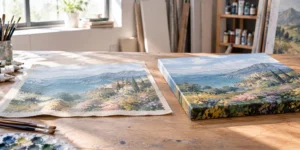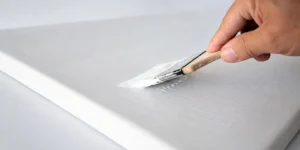
Painting on a loose, unstretched canvas and stretching it later is a practical option for many types of artwork. It is especially suitable for large-scale paintings, works that need to be rolled for transportation, and certain acrylic paintings. This approach generally works well with relatively flexible painting media such as acrylics, while oil paintings and other paint layers that become relatively brittle after curing carry a higher risk of cracking. With proper preparation and careful handling, even beginners and hobby artists can achieve a professional-looking, flat finished result.
Main Advantages of This Approach
For large-scale artworks, painting first and stretching later can be a very practical solution. A pre-stretched canvas is bulky and relatively heavy, making it inconvenient to transport and store. Very large framed canvases may even be difficult to fit through standard elevators or doorways. An unstretched canvas can be rolled for storage and then stretched at the exhibition venue or the customer’s home, significantly reducing the difficulty of transporting and installing large artworks. This approach can also be used for some large-scale murals and installation artworks.
This method also saves space and improves portability. A completed unstretched canvas can be laid flat or rolled, taking up far less space than a rigid frame. It is particularly convenient for outdoor painting, short-term artist residencies, or situations where the artwork needs to be shipped elsewhere for framing. For artists producing works in batches, it can also greatly reduce the amount of storage space required.
In terms of cost and flexibility, buying canvas by the roll can be more economical than purchasing pre-stretched canvases. You can cut the canvas to any size according to your creative needs, without being limited by standard frame dimensions. You also do not need to purchase large quantities of stretcher bars in advance, allowing you to make frames as needed and reduce unnecessary material waste.
Unstretched canvas also offers greater freedom in how you work. You can secure the canvas to a table, floor, temporary board, or wall, allowing for different working positions and creative habits. For artists who prefer flat painting or broad brushstrokes, working on a loose canvas may be more convenient than working on a vertical stretched canvas. Without rigid frame edges getting in the way, there is also less risk of accidentally rubbing or bumping the edges during the painting process.
Risks and Limitations to Consider
The main risk of this method comes from the tension applied to the dried paint layer when the canvas is stretched. As the canvas fibers are pulled tight, the paint layer on the surface is also subjected to stretching. If the paint layer lacks flexibility, is excessively thick, or has become relatively brittle, cracking or even flaking may occur.
High Cracking Risk for Oil Paint
Oil paint carries a relatively higher risk. Once fully cured, an oil paint layer becomes relatively brittle. If the canvas is subjected to significant stretching or deformation, fine cracks may develop, while thick impasto layers may also be at risk of cracking or flaking. Professional framing and art conservation practices generally recognize that stretching a completed, collectible oil painting at a later stage can cause irreversible damage. Therefore, valuable or collectible oil paintings should ideally be assessed by a professional framer or conservator before deciding whether to stretch them after painting.
Flexibility Advantages of Acrylic Paint
Acrylic paint is generally more suitable for this approach. Compared with fully cured oil paint, acrylic paint films are usually more flexible, and thin to medium-thickness layers can generally tolerate normal amounts of stretching. However, thick impasto, hard modeling paste, or work exposed to low temperatures that make the paint film more brittle can still be susceptible to cracking, so stretching tension should be carefully controlled.
Shrinkage and Distortion of Natural Fibers
Natural-fiber canvases can also experience dimensional changes. Cotton, linen, and other natural fibers expand and contract to some extent as humidity changes. If you are using natural-fiber canvas that has not been pre-shrunk, you may consider pre-shrinking it before painting to reduce later dimensional changes and fluctuations in canvas tension. If the canvas develops uneven tension or localized wrinkles after stretching, the cause may also be related to the stability of the canvas itself, changes in environmental humidity, or uneven stretching force.
At the same time, once the canvas is stretched, the warp and weft threads are placed under tension, so the visible texture of the fabric may appear flatter and tighter than it did when the canvas was loose. If your artwork relies heavily on the original texture of the canvas, the final appearance may differ somewhat from what you initially expected.
Suitability of Different Painting Media
| Painting Medium | Suitability | Key Notes |
|---|---|---|
| Acrylic Paint | Highly suitable | Cured acrylic paint films are generally flexible. Thin to medium layers can usually tolerate normal stretching, while thick impasto, modeling paste, and low-temperature conditions require greater care. Allow the work to dry and cure sufficiently before stretching. |
| Oil Paint | Not recommended for valuable works | Fully cured oil paint layers are relatively brittle and may crack when subjected to significant stretching. Even thinly painted works should be sufficiently dry before stretching. Valuable works should be assessed and handled by a professional framer or conservator. |
| Watercolor / Gouache | Use with caution | Water-based media on loose canvas require greater care. Repeated exposure to water may cause the canvas to wrinkle, shrink, or deform, making it more difficult to achieve a flat surface after stretching. They are generally less suitable for this approach than media such as acrylic. |
| Acrylic-Based Mixed Media | Moderately suitable | Suitability depends on the specific materials used. Avoid combining acrylic layers with oil-based, heavily applied materials that are prone to cracking, and make sure all water-based layers are sufficiently dry and cured before stretching. |
Key Steps for Stretching a Painted Canvas
If you plan to do the stretching yourself, following a few basic principles and key steps can greatly reduce the risk of paint cracking and surface damage. More detailed techniques for stretching, handling corners, and dealing with common problems can be covered in a dedicated canvas-stretching tutorial.
Crucial Preparation Before Stretching
First, make sure the paint is sufficiently dry and cured. For thinly painted acrylic works, it is generally advisable to wait at least 1–2 weeks; for thick impasto works, 4 weeks or longer is recommended. For thinly painted oil works, allow at least 2–3 months, while thickly painted works are best left for 6 months or longer. The actual time required also depends on the type of paint, layer thickness, temperature, and humidity. The more thoroughly the paint layer has dried and cured, the lower the risk of damage during subsequent stretching.
Leave enough excess canvas when cutting. As a general guide, the canvas should extend about 5–10 cm beyond each side of the stretcher frame so it can wrap around the bars and be secured to the back. Insufficient allowance may make it difficult to achieve proper tension or even cause the canvas to come loose during stretching. For very large works, heavy canvas, or deep stretcher bars, additional allowance may be needed depending on the actual frame structure.
If you are using cotton, linen, or another natural-fiber canvas that has not been pre-shrunk, consider pre-shrinking it before painting to reduce dimensional changes and tension fluctuations caused by later changes in humidity.
The Four Core Steps
- Step 1: Assemble and Square the Stretcher Frame — After assembling the stretcher bars, measure the two diagonals and make sure they are equal so that the frame is square. A frame that is not square can cause permanent wrinkles in the canvas. For large canvases, consider adding cross braces or center supports to improve stability.
- Step 2: Center the Artwork and Protect the Surface — Place a clean soft blanket or foam pad on the work surface and lay the artwork face down to protect the painted surface from scratches. Position the stretcher frame in the center of the back of the canvas, making sure the excess canvas is evenly distributed on all four sides.
- Step 3: Stretch and Secure the Canvas Alternately — Begin securing the canvas at the center of each side, working alternately between opposite sides so that tension is distributed evenly. Control the amount of stretching carefully. The goal is a flat, evenly tensioned canvas, not maximum tension. Excessive stretching can increase the risk of damage to both the canvas and the paint layer.
- Step 4: Finish the Corners & Inspection — Fold the excess canvas neatly at each corner and secure it to the back of the frame for a clean finish. Once completed, you can lightly tap the canvas surface as a simple check. The canvas should have even, consistent tension overall. If one area is noticeably loose or excessively tight, make adjustments as needed. Do not rely solely on the sound produced by tapping to judge tension, since the sound varies depending on the canvas material, thickness, and size.
Two Important Precautions:
1. Avoid stretching the canvas in extremely cold or excessively dry conditions. Low temperatures can make some paints and coatings more brittle, while changes in humidity can affect canvas dimensions and tension. It is best to work indoors in an environment with relatively stable temperature and humidity.
2. If the artwork still needs to be stretched, it is generally advisable to apply the final protective varnish or finishing coat after stretching. This can reduce the risk of the coating being affected by canvas movement during stretching. The specific process should still depend on the type of varnish and the materials used in the artwork.
Practical Tips for Better Results
When choosing canvas, consider a medium-weight cotton, linen, or cotton-linen blend with a stable weave and good strength. Lightweight, low-grade canvas generally has lower fiber strength, is more prone to tearing, and may be more difficult to tension evenly. It may also become loose or sag more easily over time. For large-scale works, choose a stronger and more structurally stable canvas.
The stretcher bars should also be of good quality. Properly dried, structurally stable wooden stretcher bars are generally less likely to deform significantly as environmental conditions change. Poor-quality or moisture-unstable wood may warp as humidity changes and affect the finished artwork. For large works, select a stretcher-bar structure appropriate for the size of the frame and consider adding center supports to improve overall stability.
For valuable artworks or heavily impastoed oil paintings, it is best to have the work handled by a professional framer or art conservator. Damage caused by mistakes during stretching can be irreversible. Beginners can also practice first on a small piece of scrap canvas to become familiar with controlling tension before working on a finished artwork.
Frequently Asked Questions (FAQ)
What should I do if the canvas becomes loose after stretching?
If the looseness is minor, first check whether the temperature or humidity of the environment has changed recently, and inspect whether the overall canvas tension is even. The tension of natural-fiber canvas can fluctuate with changes in humidity and may improve somewhat once the environment becomes stable again.
If the canvas is noticeably loose, you may need to adjust the stretching tension. For finished artworks, especially oil paintings or heavily impastoed works, it is not recommended to force the canvas to shrink by spraying it with water, as this may cause uneven shrinkage or affect the paint layer. If necessary, seek help from a professional framer.
Are there other ways to frame an unstretched canvas if I do not want to stretch it?
Yes. You can mount the canvas in a conventional frame, use a floater frame for a frameless-style presentation, or mount the canvas onto a rigid board to create a panel artwork. Stretching it onto a traditional stretcher frame is not the only option.
Conclusion
Overall, painting first and stretching later is a practical creative method, especially for acrylic paintings, large-scale artworks, and artists who need portability. As long as you understand the risks associated with different painting media, prepare the work properly, and control the waiting time and stretching tension according to the materials, thickness, and size of the artwork, you can achieve a professional and well-tensioned finished result.