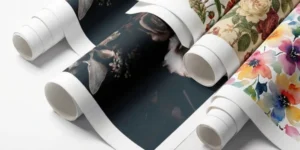
A gallery wrapped canvas is a type of stretched canvas that is wrapped around all four sides of a wooden stretcher frame and secured at the back. Unlike traditional framed artwork, the canvas extends beyond the front surface to cover the sides, creating a clean, finished appearance. Gallery wrapped canvas is commonly used for oil paintings, acrylic paintings, photo prints, and decorative wall art, and it can usually be displayed without an additional traditional frame.
How Is a Gallery Wrapped Canvas Made?
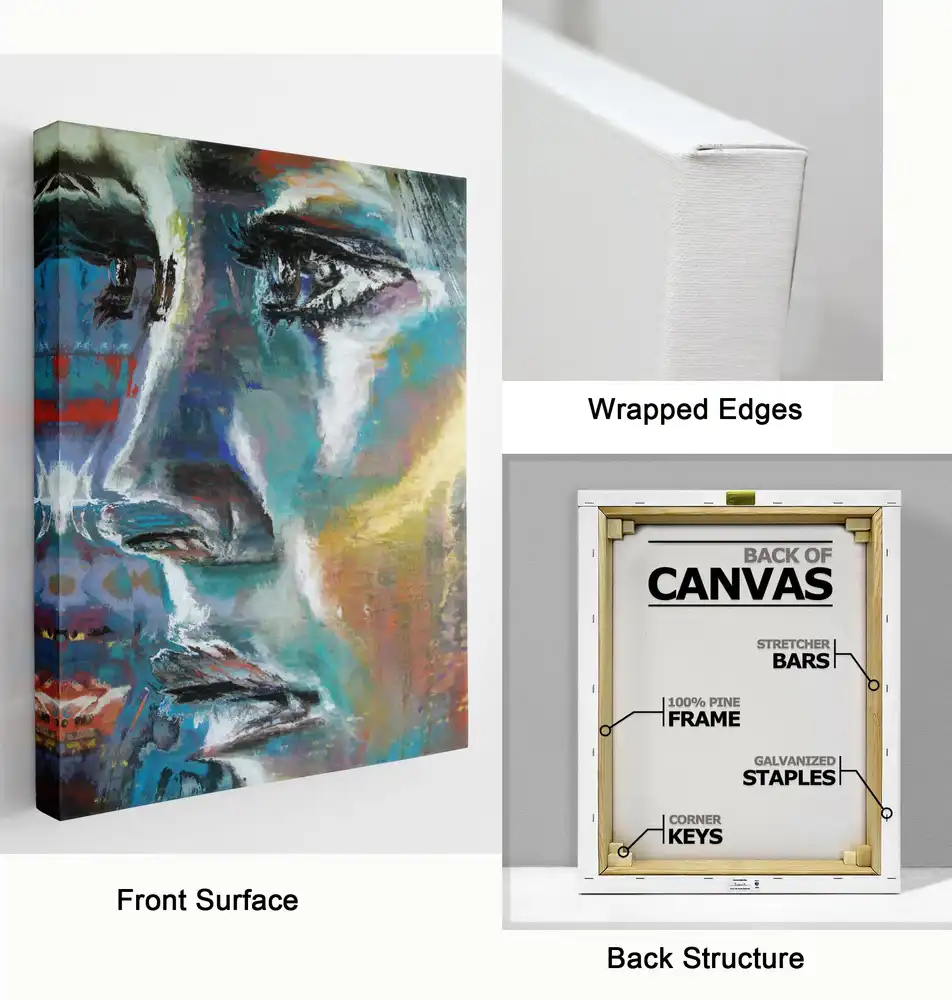
A gallery wrapped canvas mainly consists of two components: canvas fabric and a wooden stretcher frame. During production, the canvas is first placed over the front of the frame. It is then stretched tightly, pulled around all four sides, and secured at the back.
The wooden stretcher frame supports the canvas and helps keep the surface flat. Its thickness and construction vary depending on the artwork’s size and product design. For larger canvases, some frames also include cross braces to provide additional support.
This construction creates a continuous appearance across the front and sides of the canvas. Staples or other fasteners are usually hidden on the back, keeping the artwork looking neat and professional when viewed from different angles.
What Are the Different Edge-Wrapping Styles?
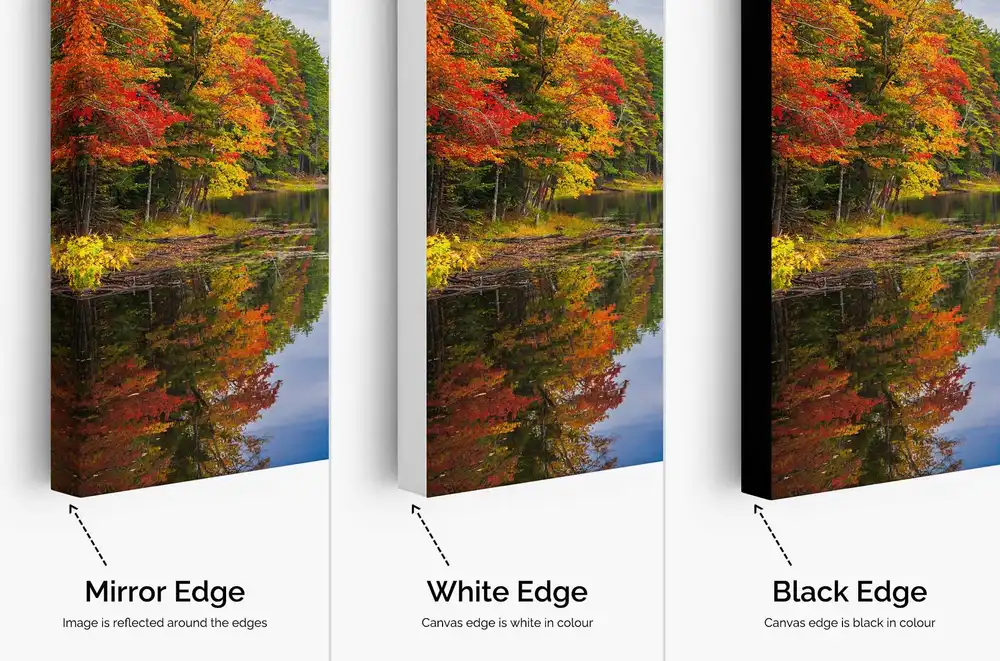
One defining feature of a gallery wrapped canvas is that its sides remain visible. During production, you need to decide how the image should extend around the edges. There are four common edge-wrapping methods:
| Edge Style | How It Works | Best Suited For |
|---|---|---|
| Image Wrap | The original image is extended directly around the sides of the canvas. | Landscapes, abstract art, and designs with large areas of color. |
| Mirror Wrap | The image along the edges is mirrored and repeated on the sides. | Portraits, family photos, and images with subjects close to the edges. |
| Solid Color Wrap | The sides are finished in black, white, or another solid color. | Product photos and minimalist artwork. |
| Average Color / Blurred Wrap | The sides are filled with colors sampled from the image edges or with a blurred version of the image. | Artwork where a natural color transition between the front and sides is desired. |
The main difference between these methods is what appears on the sides of the canvas.
Image Wrap
Image Wrap allows the original artwork to continue naturally around the sides. However, parts of the image near the edges may wrap out of view from the front.
Mirror Wrap
Mirror Wrap repeats the image along the edges to fill the sides. This helps preserve the main subject on the front without significantly changing the original composition.
Solid Color Wrap
Solid Color Wrap creates a simple, clean appearance. It is suitable for artwork where you do not want the original image to extend onto the sides.
Average Color / Blurred Wrap
This method fills the sides with colors sampled from the edges of the original image or a blurred version of the artwork. It creates a softer transition between the front and sides.
Important: If your artwork contains important details such as faces, text, signatures, or logos, avoid placing them too close to the edges. Part of the image may wrap around the sides, depending on the wrapping method. The safe margin should be determined by the stretcher frame depth and the printing template provided by the manufacturer.
What Is the Difference Between Gallery Wrapped Canvas and Other Canvas Types?
When shopping for or learning about canvas, you may come across three common terms: Gallery Wrapped Canvas, Stretched Canvas, and Rolled Canvas. Although they are related, they describe different canvas formats.
Gallery Wrapped Canvas
The canvas has already been stretched over a wooden frame and wrapped around all four sides. The edges are finished, so it can usually be displayed without a traditional frame.
Stretched Canvas
Stretched Canvas refers to canvas that has been pulled tight and secured to a wooden stretcher frame. It is a broader term because the sides can be finished in different ways. Gallery Wrapped Canvas is one type of Stretched Canvas.
Rolled Canvas
Rolled Canvas is not attached to a wooden stretcher frame. It is usually rolled for storage or shipping and needs to be stretched or framed before it can be displayed.
| Comparison | Gallery Wrapped Canvas | Stretched Canvas | Rolled Canvas |
|---|---|---|---|
| Wooden Stretcher Frame | Yes | Yes | No |
| Already Stretched | Yes | Yes | No |
| Side Finish | Image, mirrored image, or solid-color wrap | Depends on the product design | Not finished |
| Ready to Display | Usually | Depends on the side finish and personal preference | Requires further processing |
Another term that can cause confusion is Museum Wrap. It generally refers to a finish in which the artwork remains fully on the front, while the sides are left blank or finished in a solid color.
Important: Different manufacturers may use the terms Gallery Wrap and Museum Wrap differently. Do not rely on the product name alone. Always check the actual product photos and side-finishing details before making a purchasing decision.
How Do You Choose the Stretcher Frame Depth?
Gallery wrapped canvases are available with wooden stretcher frames in different depths. The deeper the frame, the farther the canvas projects from the wall, creating a more three-dimensional appearance.
| Frame Depth | Metric Equivalent | Visual Effect |
|---|---|---|
| 0.75 inch | About 19 mm | Slim profile with a simple, clean look. |
| 1.25 inches | About 32 mm | Moderate depth with some dimension. |
| 1.5 inches | About 38 mm | More visible sides and a stronger visual presence. |
| 2 inches or more | About 51 mm or more | A deep profile with a more pronounced decorative effect. |
These are common stretcher frame depths available on the market, not universal standards. When choosing a frame depth, consider the canvas size, available wall space, and the display effect you prefer.
What Are the Advantages of Gallery Wrapped Canvas?
Gallery wrapped canvas is popular because it offers a clean display style and is convenient to use. Here are some of its main advantages:
- No Traditional Frame Required: The sides are already finished, so the canvas can usually be displayed as it is without purchasing an additional traditional frame.
- Neat and Professional Appearance: Staples or other fasteners are usually placed on the back, keeping the sides clean and uncluttered.
- Three-Dimensional Effect: The wooden stretcher frame creates space between the canvas and the wall, giving the artwork more visual depth.
- Flexible Display Options: The canvas can be hung on its own or paired with a floater frame to create a different decorative style.
However, there is one thing to consider. With an Image Wrap, part of the original image near the edges will continue onto the sides. If the artwork contains important people, text, or other details close to the edges, choose the wrapping style carefully in advance.
Frequently Asked Questions
Does a Gallery Wrapped Canvas Need an Additional Frame?
Usually not. The canvas is wrapped around the wooden frame and the sides are already finished, so it can be displayed without a traditional frame. If you prefer a more layered appearance, you can also pair it with a floater frame.
Can Rolled Canvas Be Made into a Gallery Wrapped Canvas?
Yes. Rolled canvas can be stretched over a wooden frame during a later production step to create a gallery wrapped canvas. Enough extra canvas must be allowed to cover the sides of the frame and be secured at the back.
How Should a Gallery Wrapped Canvas Be Hung?
A gallery wrapped canvas can usually be hung directly on a wall, but whether hanging hardware is included depends on the specific product. Common hardware options include:
- Sawtooth hangers
- D-rings
- Hanging wire
Choose suitable hardware and a mounting method based on the canvas size, weight, and wall material. For larger or heavier pieces, use hardware that provides adequate support.
How Should a Gallery Wrapped Canvas Be Cleaned and Maintained?
For routine care, gently remove dust with a dry, soft cloth. Avoid using cleaning products, solvents, or a damp cloth directly on the artwork, as these may damage the printed layer or canvas surface.
Also try to keep the canvas away from prolonged direct sunlight and persistently damp environments. This helps slow fading and material aging. When moving the canvas, hold the wooden stretcher frame rather than pressing directly on the image.